Safety exposure
Grease left in the system increases the fire load.
Problem Page
If your kitchen is dealing with repeated fire inspection failures related to the hood system, the right response is usually quick, organized cleaning and clear documentation rather than guesswork.
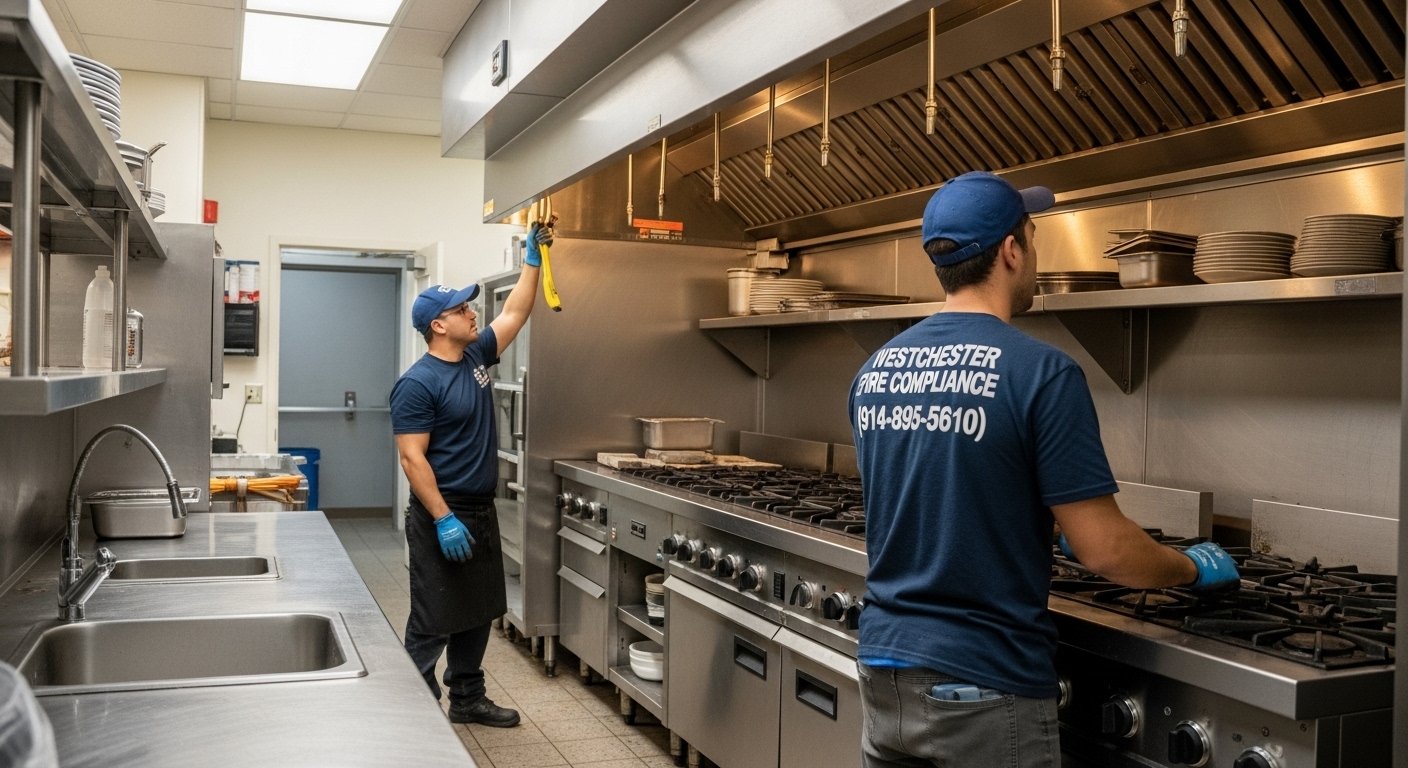
Repeated failures usually mean the underlying cause was never fully addressed. Surface cleaning, poor scheduling, or incomplete documentation often keep the problem going.
Commercial kitchens build risk gradually. Grease collects where staff cannot easily reach, records get harder to track during busy seasons or management changes, and what looked manageable a few months ago becomes a larger issue when an inspector, insurer, or landlord starts asking questions.
Longer downtime, higher costs, rising frustration, and greater exposure if a fire occurs before conditions improve.
Grease left in the system increases the fire load.
Inspections, reinspections, and scheduling pressure can interrupt normal business.
The longer grease sits, the harder and slower it is to remove.
We focus on complete cleaning scope, clear records, and realistic frequency planning so the problem is less likely to repeat.
We look at the actual condition of the hood, duct, and fan, confirm the service window that makes sense for your operation, and then complete the cleaning with practical records left behind. That helps managers move from problem mode into correction mode quickly.
It can be. If the kitchen is under inspection pressure, showing heavy grease, or cannot ventilate properly, fast scheduling is usually the safest move.
Yes. We provide service documentation so ownership and management have a clearer record of the corrective work.
Yes. Overnight and urgent scheduling is available when the kitchen cannot stop during normal operating hours.